

This article contains affiliate links. If you purchase through one of our links, we may earn a commission at no extra cost to you. This does not influence which products we include or how they are ranked.
To choose the right knife for boning, you need a narrow 5 to 7 inch blade that lets you work close to the bone, with the shape and flexibility matched to your meat. Choose a curved blade for sweeping cuts around joints and a straight blade for precise trimming, then pick flexibility based on protein.
In this guide you will learn how to match blade shape, stiffness, size, steel, and handle design to the way you actually cook. You will also see when a flexible fillet style makes sense and when you need a stiffer boning knife for control. If you are building your kit, explore our overview of top kitchen knives for every home cook to see how a boning knife fits alongside your chef and utility knives.
How to Pick the Right Boning Knife in 5 Steps
1. Match Blade Shape to Your Task: Curved vs. Straight
A curved boning knife gives you a natural rocking angle, so you can sweep along ribs, separate silver skin, and follow the contour of a ham or shoulder without lifting the meat. The belly of the curve keeps the tip engaged while your wrist stays neutral.
A straight or slightly curved narrow blade gives you more push cut control for deboning chicken, trimming fat caps, and butterflying. If you do a lot of poultry and small game, start straight. If you break down larger pork or beef cuts, lean curved.
2. Pick the Right Flexibility: Flexible, Semi-Flexible, or Stiff
Flexibility determines how closely you can ride the bone without gouging meat. A flexible blade bends to follow ribs and fish frames, which helps you maximize yield on poultry, fish, and thin fat layers.
A stiff or semi-flexible blade resists deflection, so you get cleaner, more confident cuts through connective tissue and around dense joints like pork shoulder or beef chuck. For an all purpose choice in a home kitchen, semi-flexible is the most versatile. Browse the full Knives & Cutlery collection to compare flexibility levels side by side.
3. Get the Ideal Size and Weight for Control
Most home cooks get the best control from a 5 to 6 inch blade. It is long enough to make smooth strokes along a loin yet short enough to maneuver inside a chicken cavity or around a joint.
Look for a narrow profile with a pointed tip and a thin spine. That shape reduces drag and lets you pierce and separate with less tearing. A lightweight knife reduces hand fatigue during longer trimming sessions.
4. Choose Steel and Edge Geometry That Stays Sharp
High carbon stainless steel holds a fine edge and resists corrosion, while German steel tends to be tougher and easier to maintain, and Japanese steel often takes a more acute edge. Either can work well if the heat treatment is solid.
Check the edge angle and hardness. A 14 to 16 degree per side edge slices cleanly through sinew, and a Rockwell hardness around 56 or higher helps with edge retention. You will still need regular honing and hand washing to keep performance high, just like you would with your non-stick pans for everyday cooking where gentle care extends lifespan.
5. Prioritize Handle Comfort and Safety
Your grip matters as much as the blade. Look for an ergonomic handle with textured finger points or a contoured pakkawood or polymer handle that stays secure when your hands are slick.
Full tang construction with rivets adds balance and stability, and a slight guard or bolster helps prevent slipping onto the edge. Hold the knife in a pinch grip before you buy if you can, your index finger and thumb should feel locked in without hot spots.
Products That Help With Precise Boning
Quick Picks at a Glance
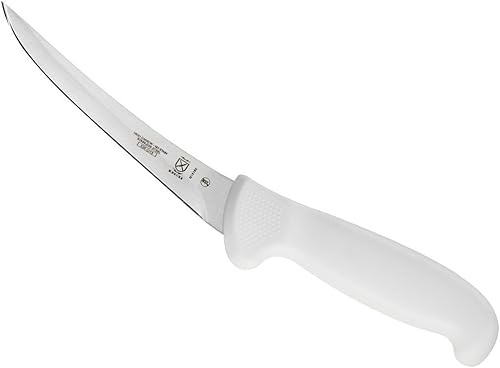
Prime Mercer Culinary Ultimate White 6-Inch

Prime Cutluxe 6" Curved Boning Knife
As an Amazon Associate we earn from qualifying purchases. Product prices and availability are accurate as of the date/time indicated.
Pros
- Exceptionally sharp out of the box with excellent edge retention
- Curved, flexible blade offers precise control around bones and joints
- Comfortable ergonomic handle remains secure during long prep sessions
- Lightweight and easy to maneuver for detailed trimming work
- Durable stain-resistant steel built for frequent use
Cons
- Handle can become slick when coated in grease or meat juices
- Hand wash only, not dishwasher safe and should not be soaked
- Stamped blade is more flexible and less rigid than forged knives for heavy duty tasks
The Mercer Culinary Ultimate White 6-Inch Curved Boning Knife is a purpose built tool designed for separating meat from bone with precision. It is ideal for home cooks, barbecue enthusiasts, hunters and anyone who regularly trims brisket, chicken, pork or fish.
In real world use, the narrow curved blade glides along bones and under fat with impressive accuracy. Users report it stays razor sharp through extended trimming sessions and resharpens quickly, leaving more meat intact while removing membrane and sinew cleanly.
Build quality centers on a one piece high carbon Japanese steel blade that resists stains and holds an edge well. The lightweight polypropylene handle features textured finger points for a secure, ergonomic grip that reduces fatigue and improves safety during detailed work.
There are a few limitations to consider. The handle can get slippery when hands are greasy, which is common with any boning knife, and it requires hand washing to preserve the edge and finish. The stamped construction also makes the blade more flexible, which is great for trimming but less suited for heavy chopping.
Overall, this boning knife delivers professional level performance in an accessible, user friendly package. If you want a reliable, sharp and comfortable knife specifically for deboning and trimming, it is an excellent choice that earns its place in any kitchen.
Brand: Mercer Culinary
Model Number: M18180
Blade Length: 6 inches, Curved Profile, Hollow Edge
Blade Material: High Carbon Japanese Steel, Stamped Construction
Handle Material: White Polypropylene with Textured Finger Points
Weight: 0.12 kg
Color: White Handle, Silver Blade
Care Instructions: Hand wash with warm water and mild soap, rinse and dry completely
Pros
- Razor sharp out of the box with excellent precision
- Perfect flex balance, sturdy for silver skin yet flexible around bone
- Well balanced and comfortable for extended use
- Durable forged German steel resists rust and staining
- Premium look and feel for the price point
Cons
- Polished pakkawood handle can feel slippery when hands are fatty or greasy
- Requires hand washing and regular honing to maintain peak edge
- Specialized narrow curved blade not suitable as an all-purpose chef knife
The Cutluxe 6 inch Curved Boning Knife is a purpose built fillet and trimming knife designed for home cooks, hunters and anyone who regularly breaks down meat and fish. Its curved, narrow profile makes it ideal for deboning, skinning and butterflying where precision and minimal waste matter most.
In real world use, the hand sharpened 14 to 16 degree edge delivers effortless, clean cuts right out of the box. Users report it glides through chicken and trims silver skin with precision, while flexing just enough to hug bones closely yet staying sturdy and controllable during longer processing sessions.
Build quality stands out with forged high carbon German steel hardened to 56 plus Rockwell for durability and stain resistance. The full tang construction with triple riveted pakkawood handle provides excellent balance and a comfortable, maneuverable grip that feels more premium than expected.
There are a few tradeoffs to consider, as the polished pakkawood handle can get slick when hands are greasy or fatty, which affects grip during heavy butchering. The specialized curved blade also needs regular honing to stay at peak sharpness and is not intended to replace a general chef knife for everyday chopping.
Overall, this Cutluxe boning knife offers outstanding value for anyone needing a dedicated meat trimming tool. It combines professional level sharpness, thoughtful flexibility and durable materials with a lifetime warranty, making it a smart buy for both serious hunters and home kitchen enthusiasts.
Brand: Cutluxe
Model: Curved Boning Knife, 6 Inch Blade, 11.5 Inch Overall Length
Blade Material: Forged High Carbon German Stainless Steel, 56+ Rockwell Hardness, Plain Edge
Construction: Full Tang, Hand Sharpened 14-16 Degrees Per Side
Handle Material: Laminated and Polished Pakkawood, Triple Riveted
Use Cases: Filleting, Deboning, Trimming, Skinning, Butterflying Meat and Fish
These curved 6 inch options illustrate the key traits above, with narrow profiles for close bone work, high carbon steel for lasting sharpness, and ergonomic handles for secure control. The Mercer Culinary Ultimate White offers a lightweight, non slip grip ideal for poultry and fish, while the Cutluxe Curved Boning Knife provides a stiffer German steel blade with a full tang pakkawood handle for confident trimming on larger cuts.
When This Won’t Fix It
A boning knife will not solve problems caused by dull edges, frozen meat, or the wrong tool for heavy butchery. If you are splitting bones, portioning frozen blocks, or breaking down whole carcasses, switch to a cleaver or butcher saw and let meat temper slightly in the fridge, or consult a professional butcher for large primal cuts.
Frequently Asked Questions
Should I get a curved or straight boning knife for chicken?
For chicken, most home cooks prefer a narrow straight or gently curved 5 to 6 inch blade with semi-flexible stiffness. It gives you precise tip control for jointing legs and trimming breast meat off the keel without tearing the skin.
What is the difference between a boning knife and a fillet knife?
A fillet knife is typically longer, thinner, and more flexible to glide along fish bones and skin in one smooth stroke. A boning knife is shorter, narrower, and often stiffer to handle meat, cartilage, and fat around joints. In 2026, many 6 inch curved boning knives bridge both tasks for home use.
How do I keep my boning knife sharp and safe?
Hand wash with warm water and mild soap, dry immediately, and store in a sheath or on a magnetic strip. Hone lightly before heavy trimming and sharpen when the edge starts to drag instead of bite. For safe handling, keep your guide hand in a claw grip and use a stable board, similar to how you protect the seasoning on your cast iron skillet for searing and baking with proper care.
Write Your Review
No reviews yet. Be the first to share your experience!