

This article contains affiliate links. If you purchase through one of our links, we may earn a commission at no extra cost to you. This does not influence which products we include or how they are ranked.
To clean a chef knife properly, hand wash it immediately after use with warm water, a small drop of mild dish soap, and a soft sponge wiped along the flat of the blade away from the edge, then rinse and towel dry it completely. This simple habit prevents rust, protects the sharp edge, and is far safer for the knife than any dishwasher cycle.
Below you will get the exact technique professionals use, what to avoid, how to handle stuck on food and odors without abrasives, and how to dry and store the blade so it stays sharp. For context on blade materials and handle types that affect cleaning, see our guide to the best kitchen knives and their care notes.
How to Clean a Chef Knife Step by Step Without Damaging It
1. Rinse and Wash Immediately After Use
Do not let your chef knife sit with food, salt, or acid on the blade. Rinse it under warm running water right after you finish cutting, then add a pea sized drop of mild dish soap to a soft sponge. This prevents pitting on carbon steel and staining on stainless steel, and it makes cleanup much easier.
Hold the knife by the handle with the edge facing away from you and your fingers clear of the blade. Wipe the sponge gently from the spine toward the edge on both sides, never scrubbing back and forth across the sharp edge. Explore more Knives & Cutlery care guides to match your cleaning method to your blade type.
2. Use Mild Soap and a Soft Sponge With the Right Motion
Use only regular dish soap and a non scratch sponge or soft cloth. Avoid steel wool, scouring powders, and the rough green side of heavy duty sponges, which create micro scratches that dull the edge and trap food. Warm water cleans effectively without needing harsh chemicals.
Clean the bolster where the blade meets the handle and both sides of the heel, where food often collects. For wooden handles, keep the handle out of prolonged water contact and wipe it separately, then dry it right away to prevent swelling or cracking.
3. Remove Stuck Food, Stains, and Odors Without Harsh Scrubbing
If food is stuck, lay a warm, soapy cloth over the flat of the blade for a minute to soften residue, then wipe gently. For light discoloration or onion and garlic odors, make a paste of baking soda and water, apply it lightly with a soft cloth, then rinse thoroughly. Never use bleach or soak the knife in a sink full of water where you cannot see the edge.
For carbon steel knives that develop a patina, avoid aggressive polishing that strips this natural protection. If you see orange rust spots, a gentle rust eraser used lightly along the flat can help, followed by a full wash and immediate drying. Always move the cloth away from the edge and work slowly.
4. Dry Thoroughly and Protect Against Rust
Drying is the most important step. Use a clean, dry towel and pat the blade, spine, and handle completely dry immediately after rinsing, then let the knife air dry for a minute on a towel before storing. Even stainless steel can spot or rust if left wet, especially near the edge and tip.
If you live in a humid climate or own carbon steel, apply a very thin coat of food grade camellia oil to the clean, dry blade with a soft cloth. This creates a protective barrier without affecting flavor and helps prevent oxidation between uses. Store the cloth separately so it stays clean.
5. Store Correctly to Keep the Blade Clean and Sharp
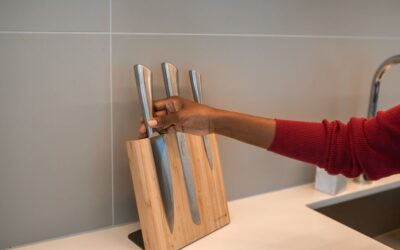
Never toss a clean chef knife loose into a drawer where it will bump other tools and collect moisture. Use a magnetic strip, blade guard, or knife block that keeps the edge from touching hard surfaces. A clean, dry storage spot reduces the need for frequent deep cleaning.
Keep the knife away from your Cookware & Bakeware where steam and splatter can leave residue. When you need to hone the edge, do it on a clean, dry blade after washing, not before, so you do not grind food particles into the edge.
Products That Help With Cleaning and Ongoing Care
Quick Picks at a Glance

Prime Yoshihiro Pure Tsubaki Camellia Oil 3.4oz

Prime Kitchellence 3-Stage Manual Knife Sharpener
As an Amazon Associate we earn from qualifying purchases. Product prices and availability are accurate as of the date/time indicated.
Pros
- Certified 100% pure and food safe for kitchen use
- Excellent rust prevention and restoration with included eraser
- Easy to apply with clean, non greasy finish that resists fingerprints
- Great value as an all in one kit with cloth and eraser included
- Highly rated for use on Japanese carbon steel knives
Cons
- Oil can become slightly sticky if not cleaned and reapplied regularly
- Requires consistent reapplication after washing to maintain protection
- Small 3.4oz size may need frequent replacement for large collections
The Yoshihiro Tsubaki Oil Kit is a purpose built maintenance set for carbon steel Japanese knives, scissors and other tools prone to rust. It is ideal for home cooks, chefs and collectors who own high carbon blades that require food safe protection after each use.
In real world use, the pure camellia oil forms a light protective layer that helps prevent oxidation even when moisture is left briefly on the blade. Users report it spreads easily, dries without sticky residue and keeps blades resistant to fingerprints and dust for days, while the Sabitori eraser impressively removes existing rust.
The kit is well designed for everyday care, with a 3.4oz bottle that features a precise conical tip for controlled dispensing. The included microfiber cloth ensures even application and polishing, and the compact blue rust eraser is durable enough to restore neglected edges without harsh abrasion.
The main drawback is that the oil needs regular maintenance to perform best, as it can turn slightly tacky if left too long without cleaning and reapplication. It is also not a heavy duty lubricant for non kitchen tools, so users seeking long term industrial protection may prefer a different product.
Overall, this Yoshihiro kit delivers a simple, effective and food safe solution for preserving valuable carbon steel blades. With its thoughtful bundle and proven performance, it is a smart essential for anyone serious about Japanese knife care.
Brand: Yoshihiro
Model Number: OIL100 / Part Number TSOIL
Item Form: Liquid, Volume 3.4 fl oz (100ml)
Material Features: 100% Pure Camellia Oil (Tsubaki Oil), Food Grade Purity
Included: 1 x Tsubaki Oil Bottle with Precision Tip, 1 x Sabitori Rust Eraser, 1 x Microfiber Cloth
Recommended Use: Cooking knives, Japanese carbon steel knives, scissors and tools
Pros
- Very easy to use for beginners with simple pull-through slots
- Effective 3-stage system revives dull everyday kitchen knives quickly
- Includes cut-resistant glove and non-slip base for added safety
- Compact, lightweight and durable ABS construction
- Consistently praised for quick, practical results at home
Cons
- Will not produce the ultra fine edge of a whetstone or professional service
- Often requires more passes than instructions suggest for best results
- Not suitable for serrated, ceramic or specialty blades
The Kitchellence 4-in-1 Knife Sharpener is a compact manual system designed for everyday home cooks, not professional chefs. It combines a 3-stage sharpening module with a cut-resistant glove to make dull knife maintenance fast, safe and approachable for both right and left handed users.
Its standout feature is the progressive 3-slot system. The coarse diamond rod repairs and straightens damaged edges, the tungsten steel slot restores the V shape, and the fine ceramic slot polishes for a cleaner finish. In real world use, reviewers report it brings old kitchen knives back to a useful, sharp edge in just a few pulls.
Built from solid ABS plastic with a non-slip base and ergonomic handle, the sharpener feels sturdy and stable during use. At just 8.3 inches long and 180 grams, it stores easily in a drawer and the included glove adds welcome peace of mind while you work.
It does have limits. This pull-through style will not produce the razor fine edge of a whetstone or professional service, and best results often require more passes than the instructions suggest. It is also designed for standard kitchen knives, so it is not ideal for serrated or specialty blades.
Overall, this is an excellent value for anyone who wants quick, consistent results without learning complex sharpening skills. If you need your daily cooking knives to be safely sharp with minimal effort, this easy to use kit is a smart addition to your kitchen.
Brand: Kitchellence (Thou Art Peter & Company)
Model: KS378 / KS37 P, ASIN B079WWFZY6, Color Black
Dimensions & Build: 8.3 x 2.2 x 3.4 inches, 180g, Solid ABS Plastic with Non-Slip Base
System: 3-Stage Slots including Diamond Repair Rod, Tungsten Sharpening and Ceramic Polishing
Included: 1x 3-Stage Knife Sharpener, 1x Cut-Resistant Glove
The products below complement proper hand washing rather than replacing it. A food grade camellia oil with a rust eraser and cloth helps you dry, protect, and touch up carbon steel, while a 3 stage sharpener with a cut resistant glove helps you maintain a clean, polished edge after regular cleaning.
When This Won’t Fix It
If your knife has deep pitting, a chipped edge, a loose handle, or thick rust that does not wipe away after gentle cleaning, washing alone will not restore it. In those cases stop using abrasive home fixes and have the blade professionally sharpened or repaired, or replace it if the damage affects safety and food contact.
Frequently Asked Questions
Can you put a chef knife in the dishwasher?
You should not. Dishwasher heat, harsh detergent, and rattling against racks dull the edge, loosen handles, and cause rust and spots. Hand washing takes less than a minute and keeps your knife sharper and safer for years, even in 2026.
How do you clean a carbon steel chef knife without causing rust?
Wash it immediately with warm water and mild soap, rinse well, and dry it completely within seconds. Apply a light coat of food grade oil if you will not use it for a day or more, and store it dry. Avoid acidic foods sitting on the blade and never leave it soaking.
Why does my chef knife smell after cutting onions or fish?
Odors cling to micro residue and to patina on carbon steel. Wash with mild soap, use a baking soda paste for stubborn smells, rinse, and dry fully. Storing the knife clean and dry, and keeping your Dutch oven and cutting boards equally clean, prevents odor transfer to the next meal in 2026.







Write Your Review
No reviews yet. Be the first to share your experience!