

This article contains affiliate links. If you purchase through one of our links, we may earn a commission at no extra cost to you. This does not influence which products we include or how they are ranked.
You know the feeling, it is 3 p.m., you have been debugging since morning, and your lower back is stiff while your neck aches from leaning toward the monitor. For programmers, a chair is not just furniture, it is the foundation for deep work, and the wrong one quietly drains your focus and energy every day.
In this guide we evaluated 8 ergonomic chairs built for long coding sessions, assessing lumbar support, breathability, adjustability, and recline based on specs and user feedback. Whether you code from a compact apartment or a dedicated home office, you will find options tailored to different heights, postures, and work styles, all curated within our Desks & Ergonomic Seating coverage and broader Home Office recommendations.
Quick Picks at a Glance
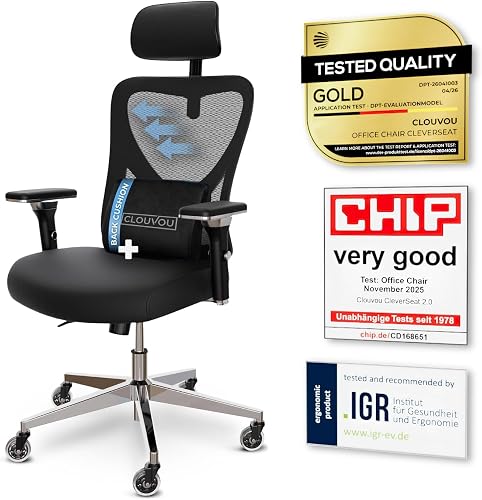
CLOUVOU CleverSeat Ergonomic Mesh Office Chair

Prime HUANUO HNOFC48B Ergonomic Office Chair with 6D

ProtoArc EC200 Ergonomic Mesh Chair

Prime ProtoArc EC200 Pro Ergonomic Mesh Office Chair

Prime ELABEST X100 Ergonomic Mesh Office Chair

GABRYLLY PF-01 Ergonomic Mesh Office Chair Review

Marsail Ergonomic Office Chair with 3D Armrests
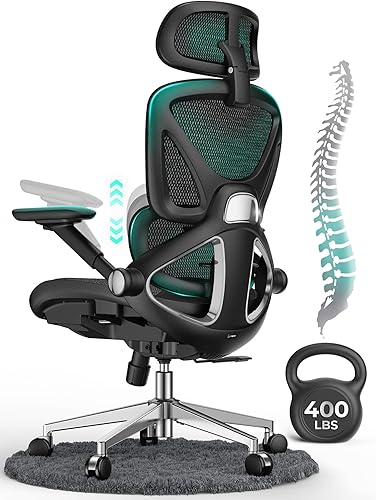
CAPOT Ergonomic Mesh Office Chair
As an Amazon Associate we earn from qualifying purchases. Product prices and availability are accurate as of the date/time indicated.
Pros
- Supports up to 330 pounds and 6 feet 5 inches
- 135-degree reclining backrest with lumbar support
- Breathable mesh backrest for airflow
- Ultra-quiet wheels for hard floors
- Adjustable headrest and armrests
Cons
- Seat cushion reported firm and unsupportive by some
- Oversized dimensions not ideal for petite users
- Armrests move too easily per one reviewer
Pros
- 6D armrests with multi-directional adjustment
- Seat depth adjustment for varied leg lengths
- Four lockable recline positions up to 123 degrees
- Rubber casters quiet on hard floors and carpet
- Five-year manufacturer warranty included
Cons
- No customer reviews yet to confirm real-world comfort
- 38.6-pound chair may be heavy to move between rooms
- Assembly required with no pre-built option
Pros
- Adjustable seat depth is rare at this price
- Lumbar support adjusts height and depth
- 55D foam resists long-term sagging
- 3D headrest with multiple lock positions
- 20-minute assembly with clear instructions
Cons
- Limited to users 5'4" to 6'0" and under 220 lbs
- 2D armrests lack 4D adjustability
- Firm cushion may feel stiff for lighter users
Pros
- All-mesh construction provides excellent airflow and prevents heat buildup during long sessions
- Extensive adjustability with 4D armrests, 3D headrest, adjustable lumbar and 5-position seat depth
- Four lockable recline positions support focused work, reading, and relaxed breaks
- Wide, comfortable headrest and large PU armrests reduce neck and shoulder tension
- Sturdy and safety tested with Class 4 gas lift and 5-year manufacturer warranty
Cons
- 220-pound weight capacity is lower than many full-size ergonomic chairs
- Requires full assembly and weighs 45 pounds, which may be bulky for small spaces
- Mesh seat feels firmer than foam alternatives and may not suit those who prefer soft cushioning
The ProtoArc EC200 Pro is a full-mesh ergonomic office chair designed for remote workers, programmers, and home office professionals who spend long hours at a desk. Built for users between 5'4" and 6'0", it focuses on breathable comfort and personalized alignment to keep you productive without back and neck strain.
In real-world use, its standout features deliver noticeable comfort benefits. The 4D armrests adjust in four directions with a wide PU surface to support any arm position, while the 2.36-inch vertical and 0.8-inch depth adjustable lumbar fills the lower back curve to prevent slouching. The 5-step seat depth adjustment and oversized 3D headrest let you fine tune thigh support and neck cradling, and the 4-stage recline locks at 90, 105, 120 and 130 degrees for seamless transitions between work and rest.
Design and build quality emphasize airflow and durability. The high-tension mesh seat and back promote circulation to stay cool, supported by a nylon frame and swivel base with smooth-rolling wheels. Safety is backed by BS EN 1335 and BIFMA X5.1 compliance and a TÜV Rheinland tested Class 4 gas lift that ensures stable, smooth height adjustment.
There are a few drawbacks to consider. The 220-pound weight limit is modest compared to some competitors, and the 45-pound chair requires assembly of the base, armrests, and backrest. Users who prefer a plush, sinking feel may find the supportive mesh firmer than traditional foam cushions.
Overall, the EC200 Pro is a compelling choice for anyone seeking a cool, highly adjustable chair for all-day home office use. It offers premium ergonomic features typically found on more expensive models, making it a smart value for coders, designers, and remote professionals who prioritize posture and breathability.
Model: ProtoArc EC200 Pro, Black, Modern Style, L-Shape Design
Materials: High-elastic breathable mesh seat and back, nylon frame, mesh upholstery
Adjustability: 4D armrests, 3D headrest 12.8 x 7.87 inches, adjustable lumbar, 5-step seat depth 1.97 inch range, 4-position recline 90 to 130 degrees
Dimensions: 20 x 20 x 44.5 inches, 45 pounds, 20 inch seat depth, fits users 5'4" to 6'0"
Capacity and Safety: 220 pounds max weight, Class 4 gas lift EN 16955, meets BIFMA X5.1 and BS EN 1335, 5-year warranty
Pros
- 17-point micro-adjustment system for personalized support
- 5D flip-up armrests tuck under standard desks
- BIFMA-certified 300-pound weight capacity
- Extendable 18-inch footrest with angle adjustment
- Dual-Stripe AirMesh for improved airflow and elasticity
Cons
- Pricey relative to basic office chairs
- 43-pound weight makes repositioning effortful
- Limited third-party review feedback available
Pros
- Sturdy build weighing around 50 pounds
- Breathable mesh for long sitting sessions
- Flip-up arms for under-desk storage
- Highly adjustable headrest, arms, and tilt
- Quick 15 to 20 minute assembly
Cons
- Not ideal for users shorter than 5'4"
- Limited armrest adjustability compared to premium chairs
- Seat may feel firm for some preferences
Pros
- Highly adjustable lumbar and armrest positioning
- Breathable mesh back for long sessions
- Supports up to 330 pounds
- Quick and straightforward assembly
- Roomy seat accommodates larger users
Cons
- Recline is rocking only, not true recline
- Tilt tension knob is tedious to adjust
- Plastic frame may feel less premium
Pros
- Highly adjustable lumbar and headrest for personalized posture support
- Breathable mesh keeps you cool during long work sessions
- Strong 400 lb capacity with stable, certified base and gas lift
- Space-saving flip-up armrests and floor-friendly PU wheels
- Well packaged with clear instructions for easy assembly
Cons
- Mesh seat feels firm initially and may require a break-in period
- Headrest adjustment can feel stiff or awkward until properly set
- Seat width with armrests down may feel narrow for broader users
The CAPOT OC.017 is a high-back ergonomic mesh office chair designed for long workdays of eight hours or more. It is built for remote professionals, students and gamers between 5ft 5in and 6ft 2in who need reliable back and neck support without investing in a premium tier chair.
In real world use, the 8-level lumbar micro-adjustment stands out by targeting the L1 to L5 region to ease lower back pressure and reduce fatigue. The enlarged Aerovith mesh seat promotes continuous airflow while the 3D headrest and backrest with 90, 110 and 125 degree locks let you shift from focused work to relaxed recline.
Design and build quality are impressive for this class, with a BIFMA X5.1 certified frame, stainless steel base and SGS leak-proof gas lift for stable height adjustment. The flip-up 4D armrests and silent PU wheels add practical flexibility, letting the chair slide under a desk and move smoothly without marking hard floors.
There are a few tradeoffs to note. Some users find the mesh seat firmer than expected and may add a cushion during the break in period. The headrest can feel awkward or stiff to adjust at first, and the seat width with arms down may feel snug for broader builds.
Overall, the CAPOT delivers strong adjustability, cooling comfort and heavy duty support for everyday productivity. It is a smart mid-range choice for anyone seeking serious ergonomic features, durable construction and consistent comfort for home office use.
Buying Guide: What Programmers Should Look For
Lumbar Support That Follows Your Spine
Programmers sit for long, uninterrupted stretches, so passive back support is not enough. Look for dynamic, adjustable lumbar that moves with you and fills the natural curve of your lower back, rather than a fixed cushion that forces you to slouch.
The ELABEST X100 Ergonomic Mesh Office Chair stands out with its 3D Synchro-Tilt lumbar that tracks your spine with depth, height, and rotation adjustments, while the CAPOT Ergonomic Mesh Office Chair offers 8-level micro-adjustment over 2 inches to align with the L1 to L5 region. The ProtoArc EC200 Ergonomic Office Chair and ProtoArc EC200 Pro Ergonomic Mesh Office Chair also provide vertical and depth-tuned lumbar to prevent that mid-afternoon ache during sprints.
Breathable Mesh and Pressure-Relieving Seats
Heat buildup and seat pressure are silent productivity killers when you are in flow. A full mesh back and seat promotes airflow to keep you cool, while a supportive cushion distributes weight evenly so your hips and thighs do not go numb after hour four.
The CleverSeat Ergonomic Office Chair Comfy [#1 uses high quality mesh across the backrest to maintain circulation, and the GABRYLLY Ergonomic Office Chair pairs a breathable mesh back with a wider cushioned seat for broader body types. For all-mesh comfort, the ProtoArc EC200 Pro Ergonomic Mesh Office Chair keeps air moving on both back and seat, much like choosing cooling sheets for hot sleepers helps regulate temperature overnight.
Adjustability for Your Height, Arms, and Legs
One size rarely fits programmers who range from 5’4″ to over 6’2″. Prioritize chairs that let you fine tune headrest height and angle, armrest position, and especially seat depth, so your thighs are fully supported without pressure behind the knees.
The HUANUO Ergonomic Office Chair with 6D Armrest offers the most flexible arm support, moving up and down, forward and back, in and out, plus tilt and rotation to relieve shoulders and wrists while typing. For leg support, both ProtoArc models include a 5-position sliding seat with nearly 2 inches of travel, and the Marsail Ergonomic Office Chair adds a 2D headrest and 3D armrests to dial in posture, which pairs well with an organized setup using clear storage bins to keep your desk zone clutter free.
Recline, Mobility, and Build Quality
Your chair should support both focused coding and quick mental resets. A multi-stage recline with lockable angles lets you stay upright at 90 degrees for typing, lean to 105 or 120 degrees for code reviews, and recline further for calls or breaks without losing lumbar contact.
The ELABEST X100 Ergonomic Mesh Office Chair adds a 3-stage recline with an extendable footrest for true break-mode recovery, while the CAPOT Ergonomic Mesh Office Chair locks at 90, 110, and 125 degrees and rolls on silent PU wheels. The HUANUO model upgrades to quiet rubber casters that glide smoothly and resist hair tangles, so you can keep floors clean with minimal effort, similar to maintaining them with one of the best cordless vacuum picks for pet hair and hard floors. Also check certifications like BIFMA and sturdy bases, as seen on the CAPOT and ELABEST models, for long term stability.
Who Shouldn’t Buy These
If you need a certified 24-hour intensive use chair for a call center, a heavy-duty drafting stool for a standing desk, or a budget task chair under the entry level range for occasional use, none of these programmer-focused ergonomic chairs will be the ideal match. In those cases, look for specialized intensive-use or industrial seating with higher weight and durability ratings, or a simple, non-adjustable task chair for very light, short duration sitting.
Final Thoughts
For most programmers who spend the majority of their day at the desk, we recommend starting with the ProtoArc EC200 Ergonomic Office Chair for its tailored seat depth and 3-point ergonomic support in a compact footprint, or the ELABEST X100 Ergonomic Mesh Office Chair if you want premium all-day recovery features like dynamic lumbar, 5D flip-up arms, and an integrated footrest for breaks between commits.
Frequently Asked Questions
What is the most important feature in the best office chair for programmers?
Adjustable lumbar support is the top priority, because it maintains your natural spinal curve during long, static coding sessions. Pair that with seat depth adjustment and breathable mesh, and you will reduce back strain, leg numbness, and heat buildup that break your concentration.
Mesh vs. cushioned seat, which is better for 8+ hour coding days in 2026?
Mesh excels at airflow and staying cool, which many developers prefer for all-day use, while high-density foam cushions offer a plusher initial feel and wider support. If you run warm or sit in a room without strong ventilation, an all-mesh model like the ProtoArc EC200 Pro is often more comfortable over time.
How do I choose the right size chair for my height and desk setup?
Check the recommended height range, seat dimensions, and whether the chair offers headrest, armrest, and seat depth adjustments to match your torso and leg length. Flip-up arms are especially useful if you need to tuck the chair under a standard desk to save space, and you can complement the setup with smart organization like a bathroom vanity for extra storage approach applied to your office, keeping cables and accessories out of the way.
Do I need a headrest and recline for programming work?
A headrest is not essential for upright typing, but a 3D adjustable headrest greatly reduces neck strain when you lean back to read, think, or take micro-breaks. A lockable recline between 90 and 130 degrees lets you shift postures throughout the day, which helps circulation and keeps you focused longer.








Write Your Review
No reviews yet. Be the first to share your experience!