

This article contains affiliate links. If you purchase through one of our links, we may earn a commission at no extra cost to you. This does not influence which products we include or how they are ranked.
To clean a dinnerware set properly, wash it soon after use with warm water, a mild dish soap, and a soft sponge or cloth, then rinse thoroughly and let it air dry completely before stacking. This gentle approach preserves glaze, prevents stains, and avoids chips or scratches regardless of material.
In the steps below you will learn how to identify your dinnerware material, hand wash and machine wash it correctly, tackle stains and cloudy film, and store it so it stays beautiful for years. For more inspiration on setting and maintaining your table, explore our guide to dinnerware and glassware care.
How to Clean Your Dinnerware Set Step by Step
1. Check the Material and Care Symbols First
Your cleaning method depends on what your set is made from. Porcelain and bone china are thinner and more delicate, stoneware is sturdy but can chip if knocked, and melamine or vintage china may not tolerate high heat or harsh detergents. Knowing this helps you choose the right approach.
Turn a plate over and look for care symbols or text like dishwasher safe, hand wash only, or not for microwave. If you see no marking or you own a hand painted set, treat it as hand wash only. Similar glazing principles apply to cookware and bakeware, so gentle care pays off across your kitchen.
2. Hand Wash for the Gentlest Clean
Fill your sink with lukewarm water and add a small amount of mild dish soap. Use a soft sponge, cloth, or natural bristle brush and wash one piece at a time, cleaning both sides and paying attention to rims where food and lipstick collect. Avoid steel wool or abrasive pads that can dull glaze.
If food is stuck on, soak the piece for 10 to 15 minutes rather than scraping. For dried on residue, let warm soapy water soften it, then wipe gently. Rinse each item under clean warm water to remove all soap, as leftover detergent can leave a film.
3. Remove Stains and Cloudy Film Safely
Tea, coffee, and tomato based sauces often leave faint discoloration. Make a paste with baking soda and a little water, apply it with a soft cloth, and rub lightly in circles before rinsing. For hard water cloudiness, soak pieces briefly in equal parts white vinegar and warm water, then wash as usual.
For more stubborn marks on white porcelain or stoneware, a non bleach cleanser designed for delicate surfaces can help lift residue without harsh scratching. The same careful approach you use for caring for non-stick pans applies here, gentle pressure and a soft tool protect the finish better than aggressive scrubbing.
4. Load the Dishwasher Correctly When You Use It
If your set is labeled dishwasher safe, you can use the machine but loading matters. Place plates securely in slots without touching, angle bowls so water drains, and keep delicate mugs on the top rack. Leave space between items so they do not rattle or chip during the cycle.
Choose a gentle or normal cycle with a mild detergent and avoid high heat drying if your machine offers an air dry option. Skip overloading and never nest pieces tightly, as vibration can cause fine scratches over time. Remove the rack promptly and inspect for detergent residue.
5. Dry and Store to Prevent Chips and Scratches
Let your dinnerware air dry on a clean dish rack or pat it dry with a soft, lint free towel. Avoid stacking while still damp, as moisture trapped between plates can lead to musty odors or water spots. Make sure each piece is completely cool and dry before putting it away.
When stacking, place a felt protector, paper towel, or soft cloth between plates and bowls. Do not pile stacks too high and store heavier items on the bottom. This simple cushioning prevents surface scratches and rim chips, keeping your set ready for daily use and special occasions.
Products That Help With Stubborn Residue
Quick Picks at a Glance
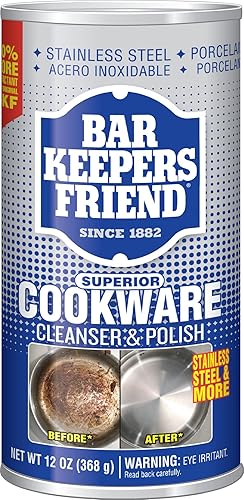
Prime Bar Keepers Friend Superior Cookware Cleanser
As an Amazon Associate we earn from qualifying purchases. Product prices and availability are accurate as of the date/time indicated.
Pros
- Exceptional power on burnt oil and carbon buildup
- Requires much less elbow grease than baking soda or vinegar soaks
- Safe for stainless steel, enameled cast iron and ceramic coated cookware when used as directed
- Proven to revive heavily stained and older pans
- Easy to use paste made with just water and a soft cloth
Cons
- Powder formula needs thorough rinsing to avoid residue
- Can be abrasive if used with steel wool or excessive pressure and may dull delicate finishes
- Not suitable for nonstick coatings and requires gentle technique
Bar Keepers Friend Superior Cookware Cleanser and Polish is a powder cleaner designed for stainless steel, enameled cast iron and ceramic coated cookware. It is made for home cooks, bakers and anyone dealing with discolored, stained or burnt on residue that regular dish soap cannot remove.
In real world use it excels at lifting carbonized oil, burnt food and brown patina with just water and a soft sponge or cloth. Users report it restores Dutch ovens blackened by high heat baking and revives decades old stainless steel pans without heavy scrubbing or harsh chemicals.
The product comes in a compact 12 ounce canister that is easy to store and dispense. The fine powder forms a smooth paste with a little water, giving you control over cleaning strength while remaining gentle enough for polished and coated surfaces when used as directed.
It does require thorough rinsing to avoid powdery residue and it can be abrasive if paired with steel wool or excessive pressure. It is also not suitable for nonstick coatings, so you will want to stick to soft tools and follow the instructions for delicate finishes.
Overall, this cleanser delivers impressive restoration power for the effort and is a smart staple for any kitchen. If you want to keep your cookware bright, clean and looking new without replacing it, this is a proven and reliable choice.
Product Dimensions: 7 x 3 x 3 inches, 11.99 ounces
Item Model Number: 11513
Manufacturer: Bar Keepers Friend
Category: Household Cleaning, Metal Polishes
Best Sellers Rank: Top rated in Metal Polishes
When baking soda and vinegar are not enough for tough discoloration, a dedicated cleanser can help. The Bar Keepers Friend Superior Cookware Cleanser is formulated to lift stains and cloudy buildup from hard surfaces without harsh bleach, making it useful for restoring white dinnerware when used gently and rinsed thoroughly.
When This Won’t Fix It
Cleaning will not repair crazing, hairline cracks, chips in the glaze, or discoloration that is actually glaze wear. If your set has cracked glaze, exposed clay, or is a vintage piece that may contain older glazes, stop using abrasive methods and consider replacement or a consultation with a ceramics restoration professional.
Frequently Asked Questions
Can you put a dinnerware set in the dishwasher?
Many modern porcelain and stoneware sets are dishwasher safe, but always check the bottom stamp first. In 2026, most manufacturers still recommend a gentle cycle, mild detergent, and air drying for longer glaze life. If your set is hand painted, gold rimmed, or vintage, hand wash it to avoid fading and chipping.
How do you remove coffee and tea stains from mugs?
Soak the mug in warm water with a little baking soda, then rub the stain lightly with a soft sponge and rinse well. For persistent rings, try a paste of baking soda and water or a brief soak in diluted white vinegar. Rinse thoroughly and dry completely to prevent the stain from returning.
Why does my dinnerware look cloudy after washing?
Cloudiness is often caused by hard water minerals or detergent residue. Rinse pieces well, use the correct amount of detergent, and try a vinegar and water soak to dissolve mineral film. You can also learn proper heat and detergent balance from guides like cast iron skillet care, where controlling residue is equally important for maintaining finish.




Write Your Review
No reviews yet. Be the first to share your experience!